
“The words I am about to use, verbatim as they appeared in the local press on 17 February, are not mine, but those of a Labour Member of Parliament who is a minister in the present government:
‘The Sikh communities’ campaign to maintain customs inappropriate in Britain is much to be regretted. Working in Britain, particularly in the public services, they should be prepared to accept the terms and conditions of their employment. To claim special communal rights (or should one say rites?) leads to a dangerous fragmentation within society. This communalism is a canker; whether practised by one colour or another it is to be strongly condemned.’”[1]
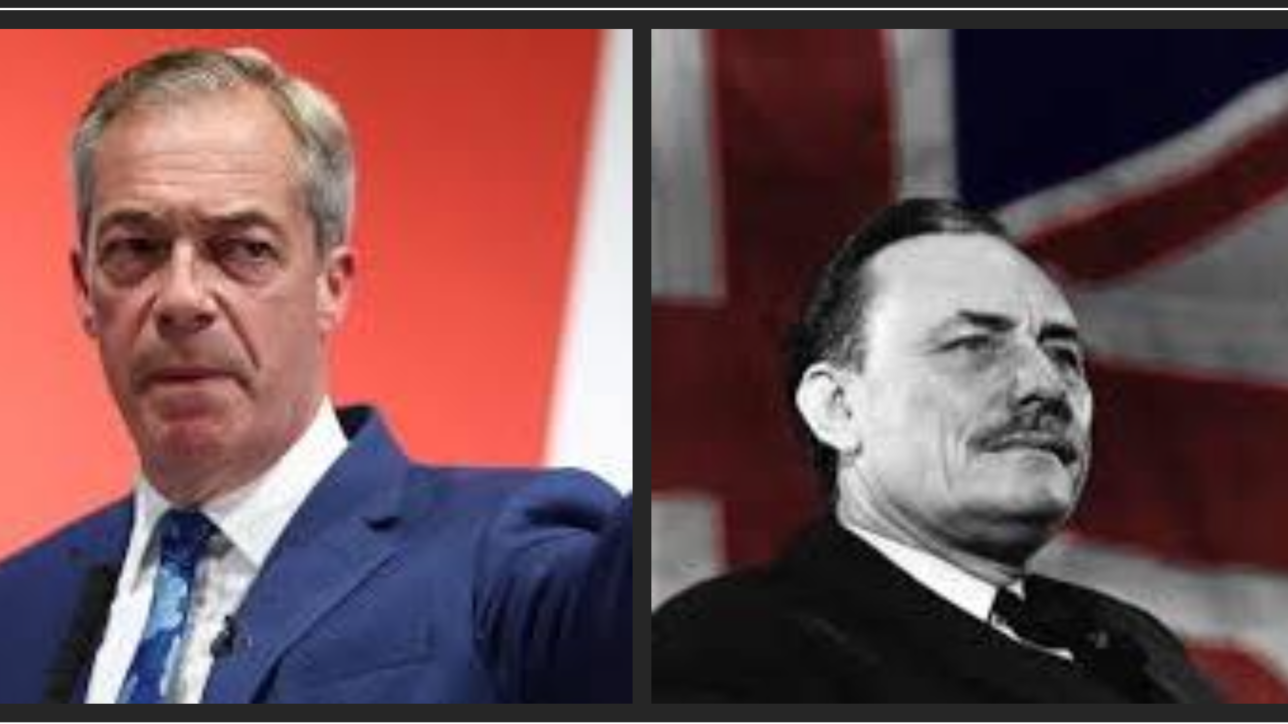
Enoch Powell’s now infamous ‘Rivers of Blood’ speech on 20th April 1968 included the above reference to the Sikh community, a prosperous and well-integrated community that continues to be in the spotlight following recent events where either their members have been subjected to horrific attacks[2] or, in the latest tragedy surrounding an innocent student’s murder, a perpetrator from among them has been imprisoned for life. The heinous circumstances behind Henry Nowak’s murder are particularly shocking in that Vickrum Digwa killed him in what has been proven to be an unprovoked attack, before calling the police and assuming the role of victim. The police, believing Digwa’s claim, subsequently arrested a fatally wounded Nowak, placing him in handcuffs and ignoring his pleas for help, after which he subsequently died.[3]
The ensuing climate following the recent verdict of life imprisonment for Digwa, circulation across mainstream media of harrowing footage showing Nowak’s final dying moments and inflammatory statements being made among far-right elements, including those in the political sphere, is one of both anger and fear.
Undoubtedly, Enoch Powell’s speech continues to resonate with some today, and Nigel Farage’s inflammatory clarion call for ‘cold rage’ to be displayed by the masses is an example of this, as well as his crude political opportunism which has been rightly condemned in parliament. However, it is important not to dismiss his remaining comments that highlight concerns many would agree with:
“Think of this; the biggest fear a police officer now has, going about his or her duty on the street, is the fear of being reported for having acted in a way that was racially biased – that fear now greater than dealing with a dying man [lying] on the ground. Henry’s family has responded to this in just the extraordinarily dignified way, but I suggest the rest of us respond to this with pure cold rage. This is wrong. All the values and standards, living in a free country where everybody is judged equally before the law, have been trashed and thrown away.”[4]
In my previous roles, where I delivered workshops around identity and security to educational frontline staff and statutory bodies, some participants privately shared fears at being perceived as racist if they expressed concerns and/or disagreement regarding sociocultural behaviours or standards witnessed among some minority communities, which they considered antithetical to British values or indeed, their own personal ones. Often, these concerns were synonymous with members from the very communities they held such views about. Unfortunately, the lack of meaningful interaction between the two meant that such perceptions persisted.
The ensuing violence that spilled onto the streets of Southampton led by Stephen Yaxley Lennon, aka Tommy Robinson, following Farage’s speech was an actualisation of the latter’s divisive sentiment, which has also galvanised what arguably constitutes a section of disgruntled Britons who are disenfranchised from mainstream politics. One wonders whether Farage’s intention was to emulate Enoch Powell and the immediate aftermath of the latter’s speech in which he lamented:
“As I look ahead, I am filled with foreboding; like the Roman, I seem to see “the River Tiber foaming with much blood.”[5]
As the history books show, his speech resulted in widespread strikes, demonstrations and the emboldening of right-wing extremists.[6]
Anti-White Racism: An Oxymoron or Downright Moronic?
Farage’s effort to equate ‘White Lives Matter’ with its opposite, BLM, and allege anti-white racism, are disingenuous, especially when considering the basis of his claim. Representing constituencies from a position of authority within a structural apparatus of power designed for whiteness dissipates or significantly dilutes any claim of anti-white racism. Had he asserted this in relation to a white minority residing within a non- white society where the majority controlled the structural apparatus, power and legislative authority etc. but were systemically discriminating against them, then there would be a case to argue, because after all, within a western societal context:
“Whiteness rests upon a foundational premise: the definition of whites as the norm or standard for human, and people of color as a deviation from that norm.”[7]
DiAngelo further observes:
“Being perceived as white carries more than a mere racial classification; it is a social and institutional status and identity imbued with legal, political, economic, and social rights and privileges that are denied to others.”[8]
Additionally, as Professor Kehinde Andrews discerns:
“Whiteness is in the DNA of the social system. Therefore, overcoming Whiteness is impossible because it is a product of the structural condition; a psychosis caused to ensure the system remains intact. There is no reasoning with a psychosis, just as there is no point in engaging in a rational debate with Whiteness.”[9]
Two Tier Policing or just more Tears?
Farage’s assertion of 2-tier policing is also something to be considered, however, it extends beyond the remit he has attempted to proclaim. Substantial evidence exists to highlight the existence of structural apparatus that perpetuates a 2-tier system against minorities – Black communities in particular:
“Racial disparities that discriminate against Black and Brown people exist at every point of the criminal justice system. This reality is most acute for Black people… Under suspicionless Section 60…Black people are 18 times more likely to be stopped and searched under this power than white people, and outside of London this increases to 43% times more likely. The grim reality of racist two-tier policing also impacts children, with Black children in England and Wales, four times more likely to be strip searched.”[10]
Additionally,
“Black Brits have been raising awareness about the disturbing truth behind police violence in the UK long before Sarah Everard, but it took the tragic death of a white woman for us to finally shed light on the institution of policing.” [11]
Once again, policing has been thrust into the spotlight due to the death of another white citizen, this time, Henry Nowak. Why hasn’t the same attention been given to the institutionalised racism that continues to plague the police forces, not to mention its pervasiveness across society, and disproportionately target Black communities?
Referring at this stage to the US’ decision to wade into international waters yet again by condemning what it has referred to as “ideological conditioning and two-tiered policing…” the State Department would do better to adopt a reflective stance and review its own racially institutionalised and patently differentiated criminal justice system:
“In the case of police, all cops are dealing with enormous cultural and systemic forces that build racial bias against minority groups… policing tactics can also create and accentuate personal, subconscious bias by increasing the likelihood that officers will relate blackness with criminality or danger – leading to what psychologists call “implicit bias” against black Americans…
Over time, police officers are effectively conditioned toward implicit bias. When cops are thrown into situations every day in which black people are viewed as criminal suspects, they begin to identify people’s race as an indicator for crime and danger.”[12]
Conclusion: Dismantling Babylon
The call to decolonise state and corporate institutions – from education to healthcare, banks to places of worship – is gathering momentum:
“Decolonisation means confronting many of the forces that are driving inequality and insecurity in the world today, both in Britain and abroad.”[13]
Also,
“The United Kingdom is becoming less and less united, says historian David Olusoga – not just along its borders but within each of its four nations. How can the union’s ties be renewed?”[14]
Britain’s structural foundations remain inherently flawed and perhaps the answer to Olusoga’s question can be found in Robin DiAngelo summation:
“Imagine a pier stretching out over the water. Viewed from above, the pier appears to simply float there. The top of the pier – the part that we can see – signifies the surface… Yet while the pier seems to float effortlessly, it is, of course, not floating at all; it is propped up by a structure submerged under the water. The pier rests on pillars embedded in the ocean floor.
In the same way that a pier sits on submerged pillars that are not immediately visible, the beliefs supporting our racial claims are hidden from our view. To topple the pier, we need to access and uproot the pillars.” [15]
Increasing campaigns calling for the dismantling of this existing, systemically racist – and yes, 2 tier system – rebuilding it on more equitable foundations may alarm sections of our society, but it must be the way forward. We continue to operate in what is increasingly a dysfunctional, inherently broken society and these are portents of a declining civilisation. Discourse to redress the imbalances within and across our society – and others still crippled by imperialist hegemonic strategies of the past – must be facilitated.
The alternative is to remain in the current toxic and deeply polarised sociopolitical climate that is divisive as much as it is destructive. It resembles a politics of a yesteryear, where Conservative Party candidates, like Peter Griffiths, were able to successfully campaign among the Smethwick constituency during the 1964 General Election with slogans like, “If you want a n%@ger for a neighbour, vote Labour.”[16]
In today’s climate, it would not be difficult to see a similar campaign enticing constituents, “If you prefer racism to be the norm, vote Reform.” Only this time, such a General Election campaign is likely to swell Reform party numbers beyond the landslide witnessed during the recent local elections.
[1] Enoch Powell’s ‘Rivers of Blood’ Speech, 20th April 1968, accessed 6th June 2026: https://anth1001.wordpress.com/wp-content/uploads/2014/04/enoch-powell_speech.pdf
[2] Dodd, V: ‘Man jailed for life after racially abusing Sikh woman as he raped her in Walsall,’ The Guardian, 24th April 2026: https://www.theguardian.com/uk-news/2026/apr/24/man-john-ashby-32-jailed-for-life-for-rape-and-assault-of-sikh-woman-in-walsall?CMP=Share_iOSApp_Other
[3] Lancaster, C: ‘Weapons-obsessed killer jailed for student’s murder,’ BBC News, 1st June 2026: https://www.bbc.co.uk/news/articles/c1d2w411rgro?app-referrer=deep-link
[4] Farage, N: ‘Emergency Address,’ Facebook Account, accessed 6th June 2026: https://www.facebook.com/reel/848584857859512
[5] Enoch Powell’s ‘Rivers of Blood’ Speech, 20th April 1968, accessed 6th June 2026: https://anth1001.wordpress.com/wp-content/uploads/2014/04/enoch-powell_speech.pdf
[6] History Extra: ‘Enoch Powell’s ‘Rivers of Blood’ Speech: Britain and Race in the mid 20th Century,’ accessed 6th June 2026: https://www.historyextra.com/period/20th-century/enoch-powell-rivers-blood-speech-what/
[7] DiAngelo, R: Why it’s so hard for White People to talk about Racism,’ Kindle Edition
[8] Ibid
[9] Andrews, K: ‘Back to Black: Retelling Black Radicalism for the 21st Century,’ ZedBooks, 2018, p.195
[10] STOPWATCH: “Racially disproportionate sentencing,’ accessed 6th June 2026: https://www.stop-watch.org/news-opinion/racially-disproportionate-sentencing/
[11] Solomon, A: ‘The Overlooked Reality: Police Violence Against Black Women in the UK,’ Migrant Women Press, https://migrantwomenpress.com/the-overlooked-reality-police-violence-against-black-women-in-the-uk/ [accessed 1st October 2023]
[12] Lopez, G: ‘How systemic racism entangles all police – even black cops,’ Vox, 15th August 2016: https://www.vox.com/2015/5/7/8562077/police-racism-implicit-bias
[13] Koram, K: ‘Uncommon Wealth: Britain and the Aftermath of Empire,’ https://amzn.eu/hNchfu8
[14] Wallis, L: ‘David Olusoga: ‘The UK is less equal than when I was young,’ BBC News, 30th September 2023: https://www.bbc.co.uk/news/uk-66923085
[15] DiAngelo, R: ‘White Fragility: Why It’s So Hard for White People to Talk About Racism,’ Penguin
[16] Jeffries, S: ‘Britain’s most racist election: the story of Smethwick, 50 years on,’ The Guardian, 15th October 2014: https://www.theguardian.com/world/2014/oct/15/britains-most-racist-election-smethwick-50-years-on
